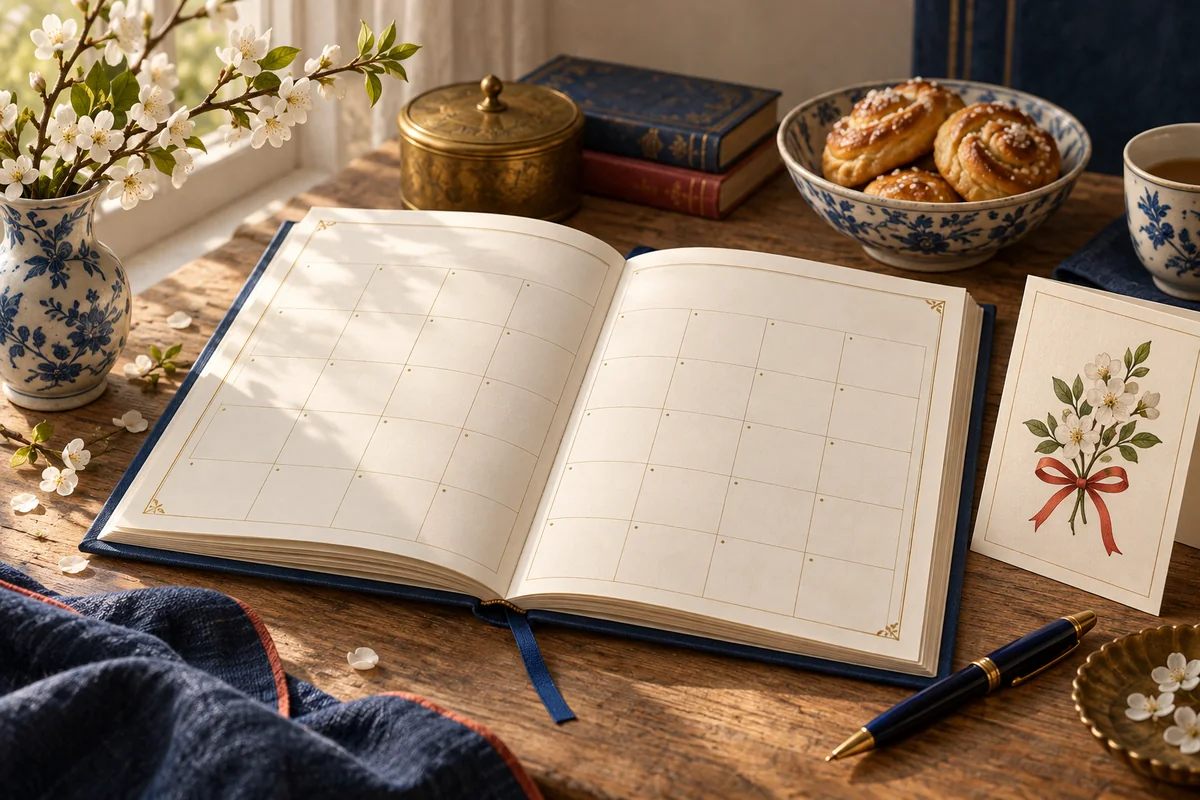
A good name-day celebration starts with two checks: the date belongs to the calendar or tradition the person follows, and the gesture suits that person. From there, a greeting, coffee, a family meal or a religious observance can all be right. There is no single party format that every name day requires.
That makes a name day easier to celebrate than it first sounds. You do not have to reproduce another country’s custom perfectly. You need to understand what the date means to the celebrant, choose a fitting gesture, and leave room for their preferences to lead.
1. Confirm the date before planning around it
The same given name can appear on different dates in different calendars. A name may also have several dates in one list, be linked to a saint’s feast, or be observed according to a family choice. Begin with the person’s spelling and the calendar or community they recognize.
If you do not know, ask simply: “Which name day do you celebrate?” When asking would spoil a surprise, choose a low-key message that leaves room for correction: “I saw your name in today’s calendar and thought of you. Is this the day you celebrate?” That is warmer than presenting a search result as personal knowledge.
For an exact lookup, keep the country and calendar attached to the name. Our name search covers the Latvian traditional and Slovak 2025 calendars. The comparison of Latvian, Greek and Polish customs explains why a lookup in one tradition cannot settle every person’s date.
2. Let the celebrant set the scale
Ask what they enjoy, or take your cue from the way they have celebrated before. The calendar gives you a reason to reach out; it does not decide whether the person wants a quiet message or a gathering.
| If they would enjoy… | A fitting plan | What makes it work |
|---|---|---|
| A little recognition | Send a short message or make a call | It marks the day without demanding time or attention. |
| Time together | Invite them for coffee, lunch or a walk | The invitation gives them a choice about when to meet. |
| A family moment | Bring a favourite pastry or plan a meal | Familiar food and company can make the occasion feel personal. |
| A group celebration | Coordinate a card or shared table | Check that they enjoy being celebrated in front of others. |
| Religious observance | Follow the person’s own community and practice | A general party idea should not replace a meaningful rite. |
These are options, not rules for countries. A custom may shape the occasion, while one family keeps it modest or celebrates differently from its neighbours. If someone says they do not mark the day, accept that answer and keep the relationship at the centre.
For a school activity that keeps personal sharing optional, see our multicultural classroom guide. For a team practice that never makes celebration compulsory, read the workplace guide.
3. Know whether you are the guest or the host
Some traditions expect the person whose name day it is to welcome visitors or provide refreshments. Others focus on friends and relatives bringing greetings, flowers or a small gift. If you are invited, follow the host’s lead rather than assuming that a birthday-style surprise is expected.
If you are organizing something for another person, do not turn an open invitation into a test of how many people remember the date. Ask before inviting a group, bringing food to work, or making a public announcement. A kind celebration gives the person a pleasant choice; it does not create a new obligation to entertain.
For a Latvian friend, the Latvian tradition guide explains how its calendar lists differ and describes common ways people mark the day. For Polish imieniny, a person may prefer one of several dates; read how to choose the date you celebrate before arranging a surprise.
4. Make a small gesture specific
A celebration feels personal when it refers to the person, not because it costs more. Add a memory to a card, choose a treat they already enjoy, or make an invitation with a real plan: “Would you like to take a walk after work and get the cinnamon rolls you like?”
For someone you do not know well, a simple greeting is enough. For a close friend, add one sincere detail or offer time together. A gift is optional; if you want one, our name-day gift guide helps match the gesture to the person. For a note or card, browse name-day wishes and make the wording sound like you.
5. Fit the plan to the calendar, not the other way around
The date might fall during a workday, a school week, travel or a religious season. Keep the meaning of the date clear, then move the gathering if that helps people take part. A message on the day and dinner on Saturday can be one celebration, not two competing versions.
When calendars or relatives disagree, separate the questions: which date does the celebrant recognize, and when can everyone meet? You can mark the chosen date with a greeting and set a convenient time for the meal. If the person prefers to keep both dates, there is no need to settle the difference for them.
A quick plan you can use
- Confirm the name spelling, calendar and date.
- Ask whether the person celebrates and what kind of attention feels good.
- Pick one gesture that matches your relationship and their preference.
- Check timing, guests and food before organizing anything on their behalf.
- Keep the message or gathering personal, simple and easy to accept.
The best name-day celebration is one the person recognizes as theirs. The calendar starts the conversation; a thoughtful choice makes the day feel meant for them.
For a small gathering, adapt a complete name-day invitation. Families with twins can plan individual attention and a shared celebration around each person’s chosen occasion.